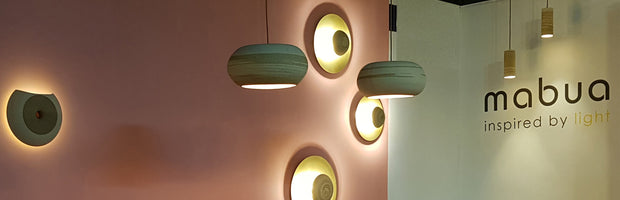
Ceramic, wood and metal: why we choose these materials
When we design a light fixture, we think about it in two states: switched off and switched on. In daylight, you see its shape, colour and texture. In the evening, light reveals another side of the material.
That is why we work with ceramic, wood veneer and metal. Each material helps determine how we make a piece. Clay takes shape on the pottery wheel, veneer is cut and stitched, and metal gives us different structural possibilities. The material is part of the design from the beginning.
Ceramic: the shape determines where light goes
Working with ceramic begins with clay and the turning of the pottery wheel. This process gives rise to the rounded forms found in many of our fixtures. Each shade is made individually, so small differences in shape and finish can occur from one piece to the next.
Ceramic has a presence even when the light is off. Once it is on, an important distinction becomes clear: the ceramic we use is opaque. Light leaves through the openings, rather than passing through the material itself. The depth of the shade, the shape of the opening and the position of the bulb all affect the result. A soft effect depends on the fixture's design and the way light is reflected and spread around it.
In Casta, for example, the ceramic dome surrounds the light source and leaves an opening below. Ceramic brings a rounded, substantial form to a fixture that directs light towards the surface beneath it.
Wood: when the material itself lights up
Wood veneer behaves differently. This thin layer of wood allows light to pass through it. When the fixture is on, the grain and variations in colour become visible. The shade itself becomes part of the light in the room.
For Drop 45, we join sections of veneer by sewing them together. It is a method borrowed from textiles, applied here to wood. The joins are part of both the shade's construction and its appearance.
Light passing through the veneer takes on a warm, soft tone. Unlike an opaque shade that directs light through an opening, it also gives the material itself a glow. The bulb's colour temperature remains a separate choice, covered in our article on colour temperature and ambient lighting.
Metal: structure, finish and direction
Metal lets us work with different lines and proportions from ceramic or veneer. It can form the structure that supports a fixture, or the body of the fixture itself.
Infinity, for example, is made from painted aluminium and is suited to dining and work tables. Here, the material makes an elongated form and a relatively slim line possible.
The finish matters too. Exposed, polished metal and painted metal do not reflect light in the same way. We therefore consider metal together with its coating, its shape and the position of the light source, rather than treating it simply as a reflective surface. The combination determines how it feels in a room.
Handwork: making room for the material
Our choice of materials is connected to the way we want to work. Clay lets us shape volume on the wheel. Veneer lets us build a shade from stitched sections. Metal offers another way to construct a form. Each material has possibilities and limits, and we design with both in mind.
Small differences between pieces are part of that process. The grain varies between sheets of wood, and two wheel-thrown shades will not be exact copies. We keep the intended shape without removing the qualities that belong to the material.
When choosing a fixture for your home, look at it both off and on. Do you want light on a table, a glowing wooden shade, or a long line above a surface? That question helps connect your choice of material to the way you want to live with the light. For the amount of light a room needs, see our guide to lumens and lux.
At our studio, material and light are designed together. We choose ceramic, wood and metal for what we can make with each of them, and for the presence they keep in a home, even with the light switched off.